What’s Behind the Balcombe Fracking Protest?

In the run up to forthcoming Salon debates in Leeds and Manchester on fracking, I decided to go down to Balcombe and find out what inspired the protestors to oppose this drilling technique.

I was expecting climate change to loom large in interviews, but I was surprised to discover this particular concern was barely mentioned. Beyond the specific risks that were believed to be posed to water, the protestors were animated by a wider sense that things were not right in the world.

www.manchestersalon.org.uk/fracking-a-technological-innovation-too-far.html
www.leedssalon.org.uk/index.php/november-2013-salon

Review: Supersized Earth

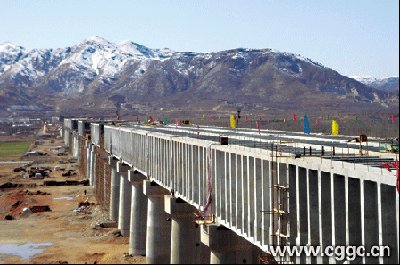
In BBC4’s fantastic documentary Supersized Earth we are taken on a journey around the world to see how humanity is transforming the planet. Episode 3 featured, amongst other things, the world’s largest cattle ranches (Brazil), the world’s biggest opencast mine (USA), and the construction of the earth’s largest man-made river (China). The Chinese are building a 700 mile aqueduct from the South to the North, with each 45m long concrete section, built on site, falling exactly 1cm from end to end.

According to the Telegraph this is one of the world’s five largest engineering projects. Yet strangely it has barely featured in the British media.

And while ordinary bloggers wrote enthusiastically about this inspiring documentary, newspaper reviewers were less excited.

TV critic at the Metro Keith Watson was the most vitriolic, claiming the documentary ‘insulted the viewers intelligence’ because it didn’t mention the problems caused by humans, only the way humans have invented solutions. Startlingly Watson accused the doc of ‘lacking an agenda other than pulling off crazy stunts’. Writing in the Guardian Tim Dowling commented that ‘there is virtually no moral dimension to this tribute to the man-made’.

The lack of a ‘moral dimension’ also puzzled other critics, who seemed lost without one. The Independent’s Tom Sutcliffe was ‘slightly at a loss to describe what Supersized Earth is about. Engineering?Social change?An opportunity to make Campbell do thrillingly ghastly things?’ Andrew Anthony in the Observer complained that ‘you constantly had to remind yourself what it was about’.

‘It’s probably best if you don’t try to pull out a coherent thread’, Sutcliffe concluded, ‘and just treat it as the television equivalent of a flick through the technology section of the Guinness World Records’. For Anthony it was ‘the documentary as hyperactive panic attack. It left you feeling exhausted’.

Its as if they couldn’t appreciate that man’s mastery of his environment has been an achievement, instead of a problem.  ‘Carrying on as if all the ecological challenges facing Earth didn’t exist – many of which can be laid at the door at the rampant urbanisation that has stripped us of many natural resources’ complained Watson in the Metro.

‘The viewer isn’t required to fret about the population density of Hong Kong’, an astonished Tim Dowling reflected. ‘Even colossal man-made problems are portrayed as man-made solutions-in-waiting’. A massive sewerage problem under Mexico City? ‘Don’t worry – they’re building a 62km-long sewer pipe – at 7m in diameter, the world’s biggest’.

Perhaps expressions of confidence in progress through technology, without anxious worrying about risks and unequal benefits, simply goes against the grain of British culture. It seems ‘don’t worry’ is the last thing some people want to hear.

The 25 year old Chinese crane driver responsible for lifting the concrete aqueduct sections into position had a different outlook. ‘I never thought that I could participate in such a big project.  Because what I normally do is the small things’, she told the camera, grinning from ear to ear. ‘To lift such heavy loads, from my point of view I feel… I feel very …. honoured, yeah, honoured‘.

World War II: Making up stories

The BBC’s Robin Lustig announced yesterday that next Monday will be the 70th anniversary of ‘one of the most significant and least know international declarations ever made’.  Was this the declaration of independence by some obscure colony? No, this was a statement agreed by the Allied governments of Britain, the US, the Soviet Union, in which they condemned the German Nazis for their ‘appalling brutality’ and ‘bloody cruelties’ towards the Jews of Europe.

The statement was read out in the House of Commons on 17 December 1942.

What the BBC didn’t ask is why this ‘significant’ declaration was made only in 1942, over two years after the start of the war – a  global war which was fought in North Africa and Asia, and included India, the Middle East and other colonial areas under British and European rule.

And Professor Jean Seaton of the University of Westminster struggled to explain why the declaration was then swiftly dropped and ‘put under the carpet’.

http://www.bbc.co.uk/iplayer/episode/b01p7bxy/The_World_Tonight_12_12_2012/

So what was the Second World War all about?

In a recent debate at Sheffield University, authors and academics took part in a discussion about some of the myths of the Second World War.

Above is the contribution by James Heartfield, author of a new ‘Unpatriotic History of the Second World War’, who forthrightly rejects the notion that it was a ‘people’s war’ against dictatorships or facism.

The full debate can be seen at www.sheffieldsalon.org.uk/category/previous-events/

Debate: Food or flowers?

Have you ever wondered why we buy flowers from places like Kenya and Ethiopia when people there are struggling to feed themselves? In an area of the world in which regular droughts result in hunger, wouldn’t the water and land be better used to grow food?

In 2010 I visited Kenya to talk to some of the people involved in the flower industry. This is highlights of an interview with CEO of the Fresh Produce Exporters Association of Kenya, Dr Stephen Mbithi Mwikya, along with Nancy, a flower farm worker, talking at the Panda Day Care Centre in Naivasha, one of Kenya’s ‘flower towns’.

This video is part of a work in progress documentary, called ‘Bloom’, about the growth of the flower industry in Kenya.

World Music Fest

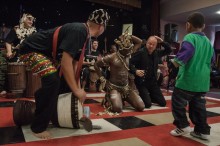
In October 2012 The Anglers Club in Leeds was the venue for a World Music Fest. Non-stop music and dancing featured local performers as well as acts from all around the World, including Songo Drumming. Watch this space for video highlights.

The media is not a profession

Other professions are regulated then why not the press? Post-Levenson this has become the new mantra. But the press is not like the medical profession, which is a closed body with exams and qualifications needed to gain admittance. The hack is not like a gas engineer who can expose its customers to harm if a pipe is not soldered correctly.

Professions are, quite rightly, elevated above the general public as experts. In order to maintain standards in their expertise they regulate themselves. Writing articles or researching stories, on the other hand, is not a skill. It does not require exams or qualifications.

The media does not engage with the public as clients who can be harmed through malpractice, but as free citizens who are robust enough to answer questions and read articles they don’t like. Of course the press can annoy and upset people – but none of this does anyone any real harm, in spite of claims by high profile celebrity ‘victims’ of ‘press abuse’.

To say the press needs regulating is like saying we all need regulating – over and above the laws which already ‘regulate’ us. The press is not a profession, despite the inflated egos of some media pundits. They are not a cut above the rest, in a class of their own. They simply exercise the freedom of expression enjoyed by us all as citizens – no more no less.

Is university worth the money?

For this short vox pop I wanted to find out what students thought about the rise in tuition fees. I drew up a series of questions asking them why they had made the decision to come to Leeds University and whether fees had put them off. I wanted students to tell me whether they thought the fees were worth it. But I quickly realised that most saw the degree as simply a necessary step into a job, so I decided to get them to reflect on the purpose of university. I wanted to know – had students no interest in the pursuit of knowledge for its own sake?

You can’t say that…. Bongo Bongo land

Apparently there are some things you just can’t say, some words that are so offensive, so wrong, that their use is beyond the pale.

Bongo bongo land is the latest phrase to provoke the condemnation of moral linguists.

What is interesting about many applications of speech etiquette is that it isnt what is said so much as the phrases used to say something. There is a right way of saying something, and a wrong way of saying something. Even though we can all agree to the truth of what is being said.

So last week the government was condemned for the wording of a billboard which said ‘go home’ – even though everyone involved in this condemnation supports some form of border controls, and therefore, the denial of liberty and the forced deportation of individuals who don’t carry a UK passport.

This latest ‘no no’ – bongo bongo land – was used to express the view that foreign aid does not go to the poor, does not aid development, but goes to a rich elite in the developing world. This view is so uncontroversial as to be common sense amongst the intelligentsia in the west. Governments act on this view by imposing ‘poverty reduction’ conditionality on aid.

Another common view is that we shouldn’t be sending aid to foreign countries when we have poverty here at home. This is not so popular amongst the intelligentsia in the west, but it is common view – sometimes reflecting the frustration that people feel that the government is not doing anything for them.

Godfrey Bloom’s view is also slightly more nuanced. He argued that the government shouldn’t be choosing its own charities and using our tax money to directly fund charities. A valid question you might think, even if you agree with the policy.

I happen to have my own views of aid. But condemning the use of bongo bongo land isnt going to convince anyone that I’m right.